FinBlocks Tech
Contact

Two channels. Both of them reach an engineer.

Send the form below and it reaches an engineer rather than a queue: an evaluation enquiry is read by someone who can answer it, and a live incident by someone who can reproduce it from the journal. Email works just as well if you would rather hold your own copy of the thread, and there is a telephone in office hours for the conversations that are faster spoken than written.

Evaluation and commercial
info@finblocks.tech
Live service incidents
support@finblocks.tech

Talk to an engineer

Tell us about your market, and the reply will be specific.

Nothing here is a qualification questionnaire. Four lines about what you are trying to open is enough to get a useful answer back, and the awkward questions are welcome earlier rather than later.

Optional
Optional, and it shapes the first answer more than you would think
Venue type, asset classes, roughly where you are in the process. Approximate is fine.

Where to write

Pick the channel by what you need, not by who you are.


Telephone and office

A number that rings in office hours, and an address behind it.

Call for evaluation and commercial questions while the office is open. For anything affecting a live market, write to support@finblocks.tech as well as calling — the response targets run against the written record, and the thread is what gets worked from.

Telephone
+1 (416) 771-1000
Mon–Fri, 9am–6pm ET. Outside those hours, email reaches the same people sooner than a voicemail does.
Office
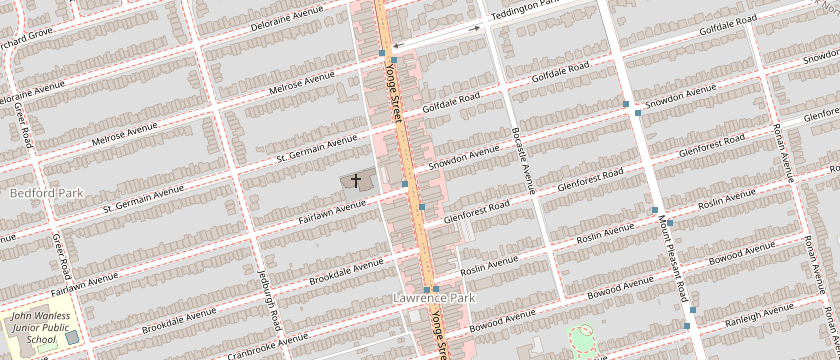
407-3335 Yonge St
Toronto, ON M4N 2L9
Canada
Elsewhere
LinkedIn · Instagram
LinkedIn carries the posts and company news. Instagram is a fixed set of reference boards on how the engine works. Neither is a support channel, so anything affecting a live venue still belongs in email.
Visiting
By arrangement. Demonstrations are normally run remotely on a live engine, which is the same session either way — but if you are in Toronto and would rather sit in the room, say so in the email and we will fix a time.
FinBlocks Tech407-3335 Yonge StToronto, ON M4N 2L9Get directions →

Map data © OpenStreetMap contributors


What a demonstration covers

About an hour, on a real engine, with your questions interrupting.

It is a working session rather than a presentation. We run a configured venue, you ask for the awkward cases, and we show them — or say plainly that the platform does not do that yet.

01

The order book

We enter orders and let an aggressive order sweep the resting side under price–time priority, so you can see how price, order type, volume disclosure and time resolve against each other — including an iceberg keeping its hidden volume out of public data while participating fully.

02

The Market Control Panel

An operator configures an instrument, a tick table and a session timetable in the browser, publishes it as a versioned reference-data bundle, and halts and resumes an instrument. You see the maker–checker approval step as it happens.

03

An auction uncrossing

A pre-open call with the Indicative Equilibrium Price recalculated as orders arrive, then the uncrossing itself, then the closing price becoming tomorrow's static reference price.

04

A replay of the journal

We replay the sequence of commands that produced everything you just watched, and the fills, average prices and book states come out identical. This is the part evaluators tend to want twice.


What to bring

Tell us this and we can be useful immediately.

None of it needs to be final, and approximate answers are fine. With these six, the first conversation is about your market rather than about ours.

Asset classes and instrument count
Equities, fixed income, futures, options, rights, ETFs or something else — and roughly how many instruments at launch versus in three years. It determines whether you are a single-server venue or a distributed one.
Session model and calendar
Do you want an opening auction, a closing auction, trade-at-last after the close, a maintenance window? Which holidays, which half-days, and whether any instruments need their own timetable.
Clearing arrangement
Whether you clear yourself or through a central counterparty, and at which levels limits must hold — clearing member, trading member, end investor, or all three.
Settlement and CSD
Your settlement cycle, your depository or registry, and your banking integration for the cash leg. The engine emits clearing messages into that arrangement; we need to know its shape, not to own it.
Members and how they connect
How many member firms, and what mix of the bundled front-end, order-management systems over the HTTP/JSON API, and FIX 4.4 sessions. This sizes the conformance programme more than anything else.
Regulatory regime
Your regulator, and what it requires of records, surveillance and market-conduct reporting. It shapes what the audit trail must expose, and to whom.
What happens next

Three phases, and when each one starts.

Nothing between the first email and a live market is a surprise. Each phase has named outputs, and the next one does not start until they exist.

01

Market model workshop

First. After a demonstration and one scoping conversation, once both sides think the venue is a fit.

02

Configure and test

Second. Once the written market-model specification is agreed on both sides and the delivery scope is settled.

03

Go live and support

Third. When the conformance runs and dress rehearsals say your members are ready, not when a date on a plan arrives.